



Hi, and welcome back to East Asia Insights!
April’s selection points to a region that is adjusting its foundations, not with dramatic gestures, but through steady changes in how it manages society, technology, and energy.
In China, that means a clearer attempt to deal with long-term pressure at home while staying influential abroad. The push for more child-friendly cities shows that demographics are now a structural policy issue, not just a social concern. At the same time, China remains the factory of Asia and is continuing to use economic openings are used to build influence in Taiwan, in line with Beijing’s long-term goal of unification.
Technology remains central to this picture, but in a more practical way. TSMC’s (台積電) latest advances suggest that the next phase of the chip race will depend not only on technical leadership, but also on cost and manufacturing discipline. Singapore’s growing role as a base for AI and digital infrastructure points to a similar pattern, where trust, stability and execution matter as much as innovation itself.
Energy also runs quietly through this month’s stories. Xi’s (习) call to speed up the building of a new energy system shows how closely energy security and national strategy are now linked. Meanwhile, Taiwan’s buffer of Liquid Natural Gas (LNG), one of the cleanest fossil fuels, is becoming thin. This serves as a reminder that resilience often depends on what sits behind the headlines, storage, shipping and room to absorb energy shocks.
Below are the key developments of last month and what they tell us.
1) People & Culture
Cities built for fewer births, and more pressure on family life
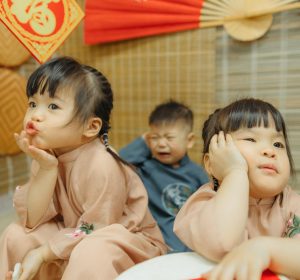
China’s new plan for youth and child-friendly cities folds housing, healthcare, childcare and education into urban policy, which shows how demographic decline is no longer treated as a private family issue. China is trying to reverse its demographic decline after births fell to 7.9 million in 2025, an unprecented low. The population shrank by 3.4 million, marking a fourth consecutive year of decline. The plan aims to build more youth-friendly cities, with measures on jobs, housing, healthcare, family support, and urban services. Europe faces the same demographic pressure but often treats housing, childcare, labour and urban policy separately. China’s approach connects struggles of the population to its policies, to better support families.
Malay heritage as part of the national story
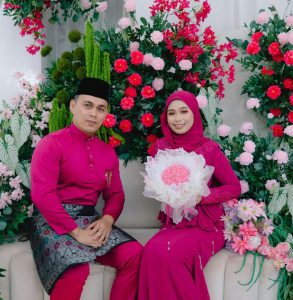
Singapore’s reopened Malay Heritage Centre is being framed not as a static museum, but as a living civic space that links diverse Malay roots to a shared Singaporean identity. This matters because it shows how the state continues to use heritage as a way to strengthen cohesion in a highly mixed society. As Europe becomes more diverse, cohesion is harder to maintain. Singapore shows how heritage can be used as a shared, evolving space that connects communities.
2) Leadership & Economy
China strengthens positions as Asia’s key production and supply hub
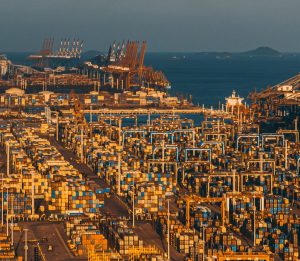
A Macroeconomic Research Office-backed Xinhua report said China is now the main hub in the ASEAN+3 production network (ASEAN countries plus China, Japan, and South Korea). The broader message is that regional supply chains are not simply “leaving China”, they are being reorganised around it in new ways. For Europe, supply chains are not just shifting away, but being reshaped around China, making it important to understand where real dependencies remain.
Beijing offers incentives to Taiwan, but on political terms

China unveiled 10 new measures for Taiwan after the opposition KMT leader’s Cheng Li-wun (鄭麗文) visit to mainland China, including easing tourist curbs, allowing in “healthy” television dramas and facilitating food sales. Economic openings are used to build influence in Taiwan, in line with Beijing’s long-term goal of unification. For Europe, awareness and understanding are essential, as recent US tariffs show how trade dependencies can translate into political leverage.
3) Technology & Innovation
TSMC (台積電) extend the frontier without a more expensive toolchain
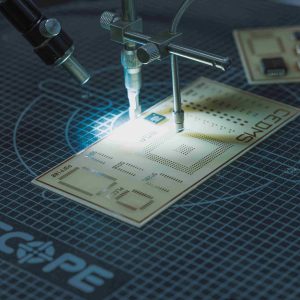
TSMC (台積電) presented smaller and faster chip technologies while signalling that it can keep advancing without immediately relying on even costlier next generation equipment. The signal here is not just technical progress, but cost discipline and manufacturing efficiency. That matters for ASML (阿斯麦), which enables chipmakers to mass-produce patterns on silicon. The semiconductor race is all about production economics and economies of scale.
Microsoft doubles down on Singapore’s AI position

Reuters reported that Microsoft (微软) is on track to invest 5.5 billion USD in cloud and AI infrastructure in Singapore by 2029. For Microsoft, these investments help grow its cloud and AI presence in a fast-growing digital region, while supporting businesses and developing local talent. For Europe, this shows how AI and cloud strength is built through long-term investment and local ecosystems. The key question is how quickly infrastructure, talent and capital come together.
4) Climate Action, Energy & Food
Xi (习) ties energy security more tightly to national strategy
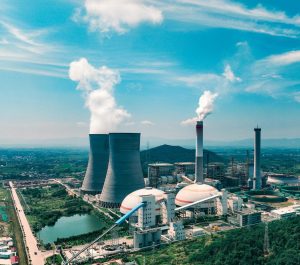
Xi Jin Ping (习近平) called for faster construction of a new energy system, with more hydropower and an orderly expansion of nuclear, as war in the Middle East kept pressure on supply risk. The key shift is that energy transition and energy security are being presented as the same project, not competing ones. Europe is moving the same way, but China is doing it much bigger and is increasing its nuclear power plants to 99 reactors.
Taiwan energy buffers hold, but with narrow margin
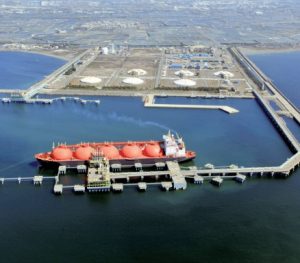
Taiwan said its oil and LNG reserves remain stable despite Middle East tensions, with LNG reserves at about 12 days, only slightly above the legal minimum of 11 days. The deeper signal is not immediate scarcity, but how narrow Taiwan’s energy buffer remains when so much depends on imported fuel and secure sea lanes. For Europe, energy security looks solid, until logistics is tested.
 Key takeaway
East Asia is not simply reacting to disruption, but it is quietly reshaping the systems behind energy, technology and everyday life..
Thanks for reading again this month. If you found this useful, feel free to share or subscribe to receive the full analysis in your inbox every month.
Stay curious,
Author of the book West meets East