



Hi, and welcome back to East Asia Insights!
In September and October, I travelled through Taiwan and China with my wife. We visited our daughter Kyra, who is taking an intensive Mandarin course in Taipei after completing her master’s degree in the Netherlands. Together, we travelled to Zhejiang to visit family and pay our respects at her grandfather’s grave. He passed away during the COVID-19 pandemic. Beyond these family moments, the journey gave me plenty to think about.
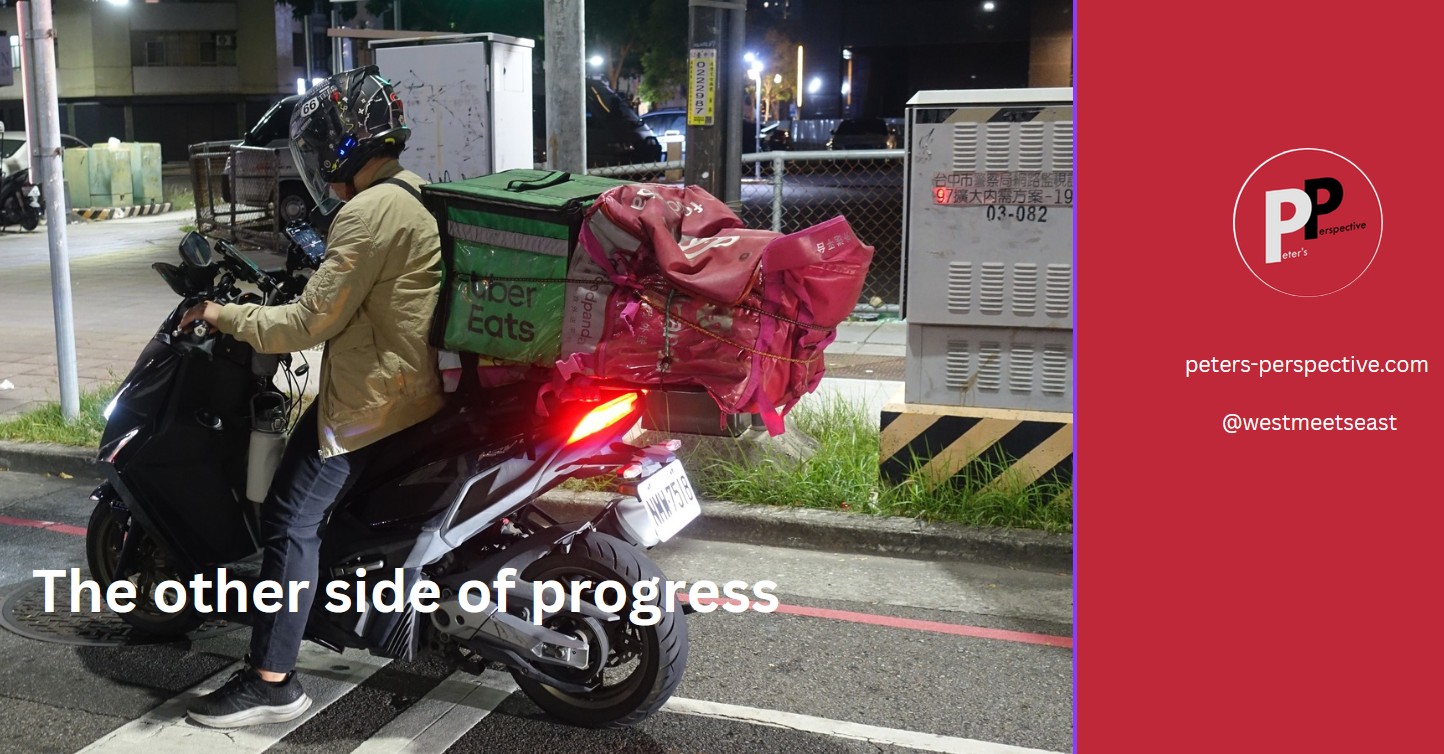
In Yunnan, I learned how some young Chinese are leaving major cities in search of a slower life, while others move in the opposite direction to find better-paid work. In Taiwan, I was struck by the rapid growth of its AI-driven technology sector, although not everyone is benefiting equally from that success. Around Taipei Main Station, I noticed more people sleeping on the streets than on my previous visits.
China continues to expand its vast high-speed rail network, while questions remain about the country’s large number of empty homes. On my train journey from Zhejiang to Yunnan, I passed numerous residential developments that looked largely unoccupied.
These experiences made me think about how we measure progress. Economic growth, advanced technology and impressive infrastructure tell us part of the story. But what do these developments actually mean for the people living through them?
That is what I want to explore in eight personal stories of my recent trip below.
1) People & Culture
Why young Chinese are moving to Yunnan
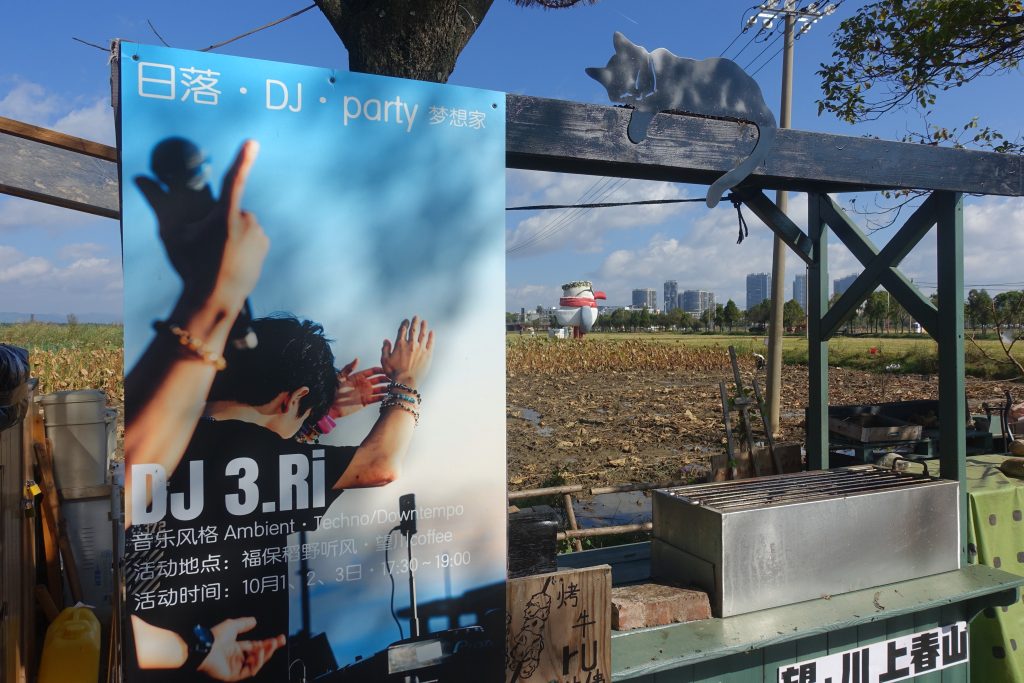
During my travels in Yunnan, I met a Gen Z woman working in a shop where I bought a painting for my aunt in Taiwan. We later exchanged messages on WeChat about why some young Chinese are choosing a different lifestyle.
She explained how young people from cities like Shanghai are moving to Yunnan for its pleasant climate, beautiful nature, lower living costs and slower pace of life, especially those who can work remotely.
But she also described a movement in the opposite direction. Many young people from rural Yunnan leave for major cities to find better-paid work and support their families. Kunming offers a comfortable lifestyle, but well-paid jobs are scarce, particularly in today’s difficult job market.
She herself returned to Kunming after five years in Beijing, choosing a slower life.
What struck me is that some young Chinese can afford to leave the rat race, while others cannot afford to escape it.
What a Taoist master taught me about European society
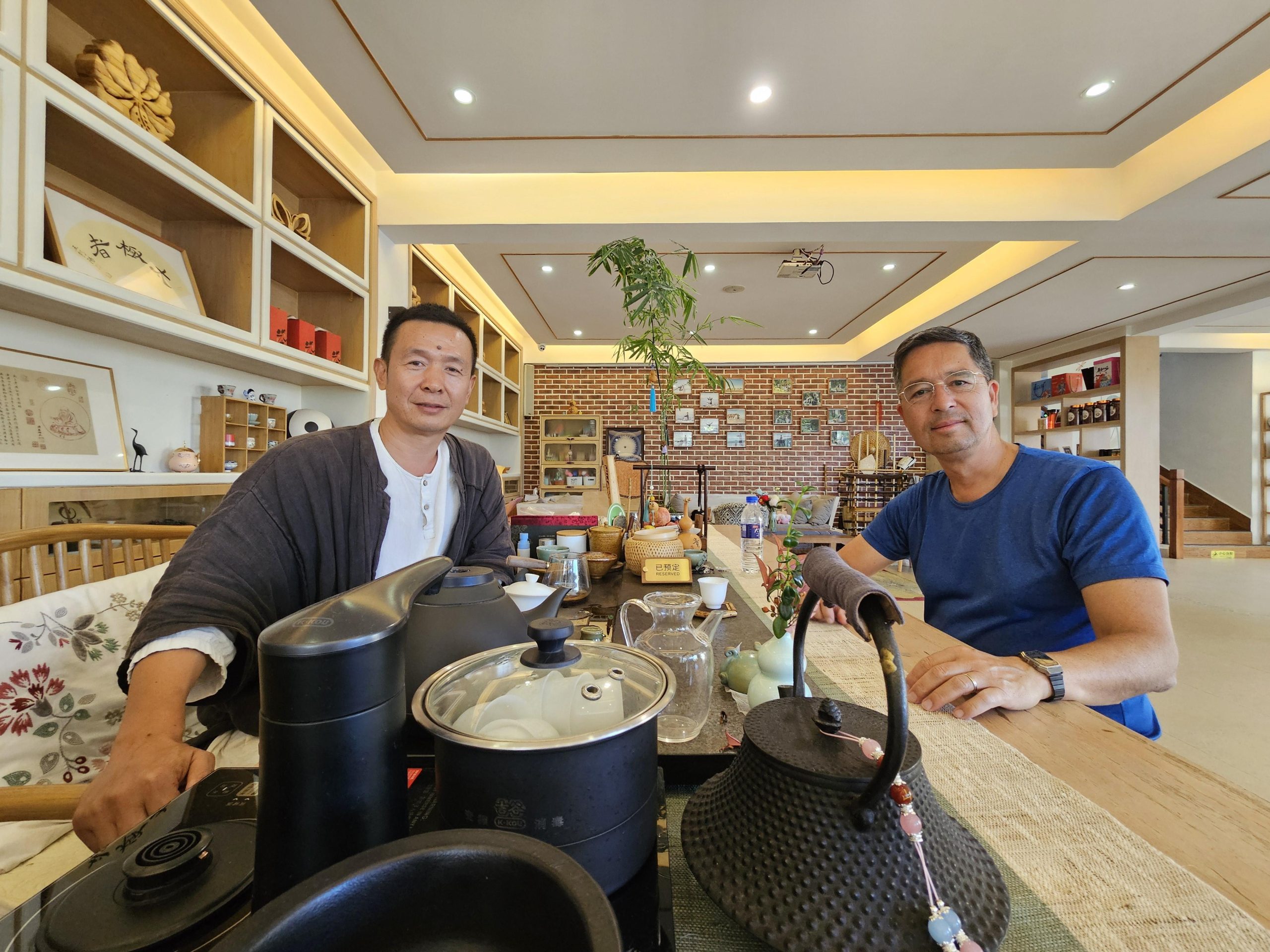
While visiting Dali in Yunnan, I spent an afternoon drinking tea with Taoist Master Huang (黃山). Our conversation took an unexpected turn when we started discussing Carl Jung and European society.
Master Huang sees similarities between Jung’s psychology and Taoist philosophy. He also suggested that Western Europeans may understand Taoism better than they realise. Taoism, he explained, values sharing and equality. He pointed to European tax systems, where people contribute to support public services and those who need help.
We also discussed Wu Wei (無為), often translated as ‘non-action’. His approach is reflected in the Chinese expression 以心行氣,以氣運身: “Use your awareness to guide Qi, and Qi to move the body.” The idea is to guide rather than force movement.
I hadn’t expected a conversation about ancient Chinese philosophy to lead us to European taxes and Carl Jung.
2) Leadership & Economy
China‘s empty apartments: who will live in them?
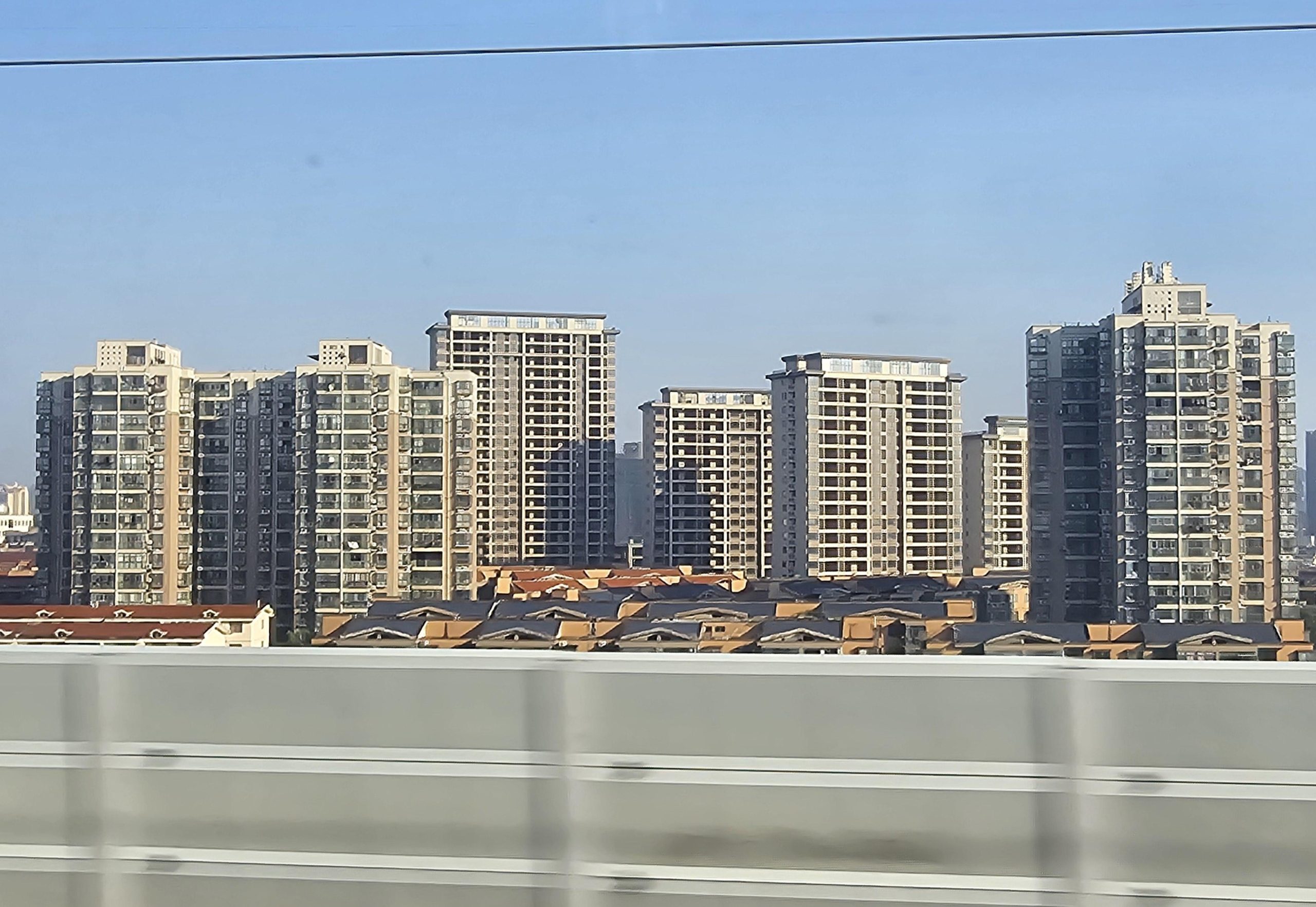
While jogging with my daughter Kyra along a river in a small town in Zhejiang, I noticed many apartment buildings that appeared largely unoccupied.
During my eight-hour train journey from Nanchang West to Kunming, I kept seeing similar developments along the railway. I was surprised by how many there were!
Housing oversupply seems particularly serious in China’s smaller cities. Property prices have also fallen, leaving some young homeowners who bought around 2020 with apartments now worth less than they paid.
With China’s population shrinking and ageing, I wonder who will eventually occupy these apartments, and what falling property values mean for young families who invested much of their savings in a home?
Kinmen (金門): Where Taiwan and China meet everyday

Walking through Kinmen, my daughter Kyra spotted bullet holes in buildings. My wife’s father served on this island from 1947 to 1955, during the Chinese Civil War and its aftermath.
We had flown from Taipei to Kinmen on our way to Zhejiang, where we would visit family and his grave.
What surprised me was how closely Kinmen remains connected to mainland China. Xiamen, where we took the ferry the following morning, is just 30 minutes away and even supplies Kinmen with drinking water.
During our taxi ride from the airport to our guesthouse, the driver told us he visits Xiamen almost every weekend for cheaper shopping and dining. He wished more mainland tourists could visit Kinmen, as their spending would help local businesses, but restrictions limit their numbers.
On Kinmen, the history of conflict is still visible, but everyday life tells a more complicated story.
3) Technology & Innovation
Taiwan’s AI Boom: From the 45th Floor to Street Level
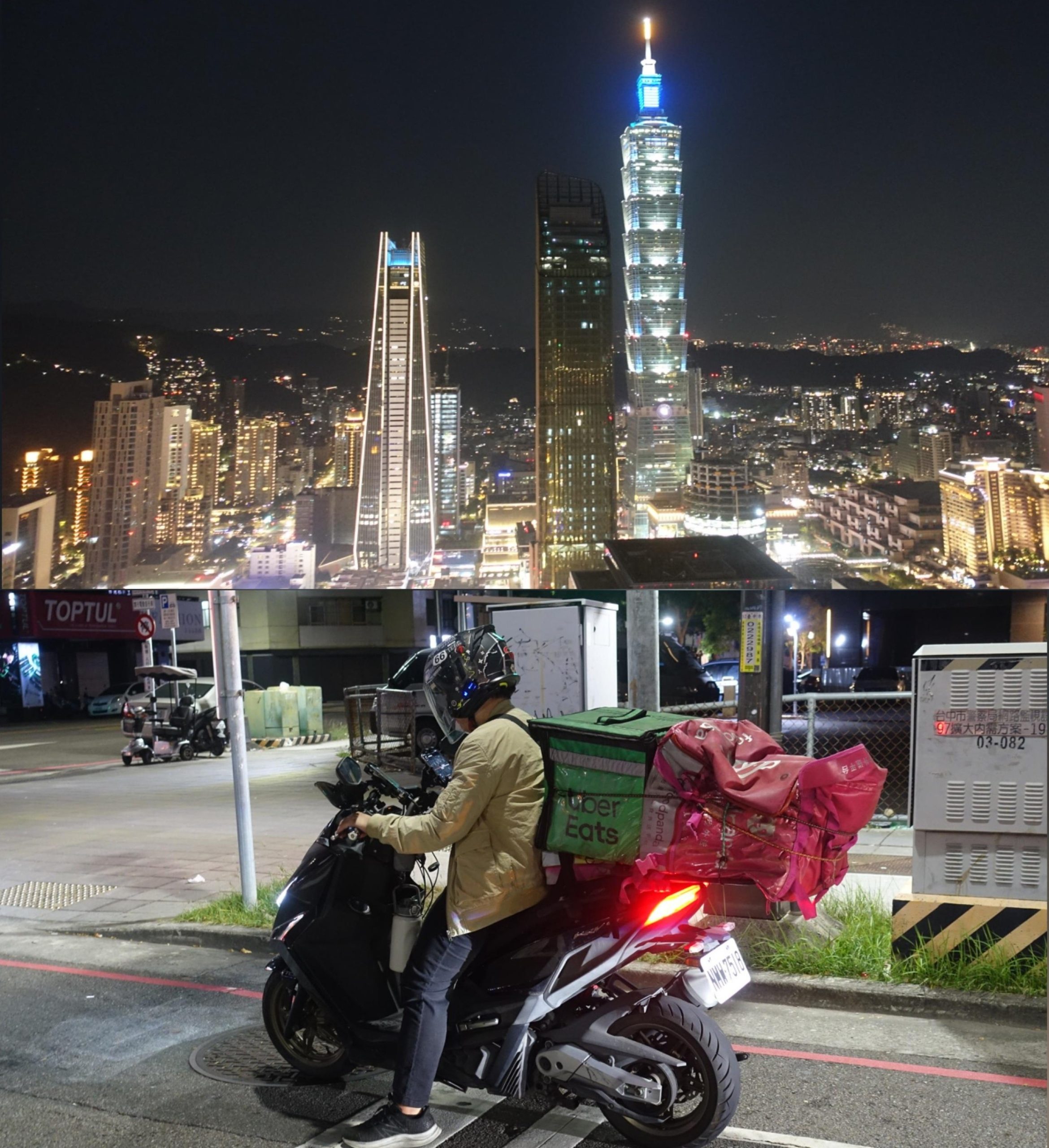
From Morten Sky Bar on the 45th floor, I enjoyed a fantastic nighttime view of Taipei 101. Looking across the skyline, I could almost feel the energy of Taiwan’s booming AI and semiconductor industries.
But I also experienced another side of Taiwan’s economy.
One evening, I rode through Taichung on the back of my wife’s nephew’s scooter. The restaurants, small shops and people working late into the night offered a different perspective. Many Taiwanese outside the technology sector struggle to earn a comfortable living.
In Hualien, I paid just NT$200 (€6) for a haircut. My barber was 65 and still working. She had one son, and when I mentioned having two daughters, she remarked that daughters were more useful than sons. Was she still working because she wanted to, or because she had to?
Taiwan’s technology industry is driving impressive economic growth. But how much of that prosperity reaches people working outside it?
Why China’s ice cream robots are no big surprise
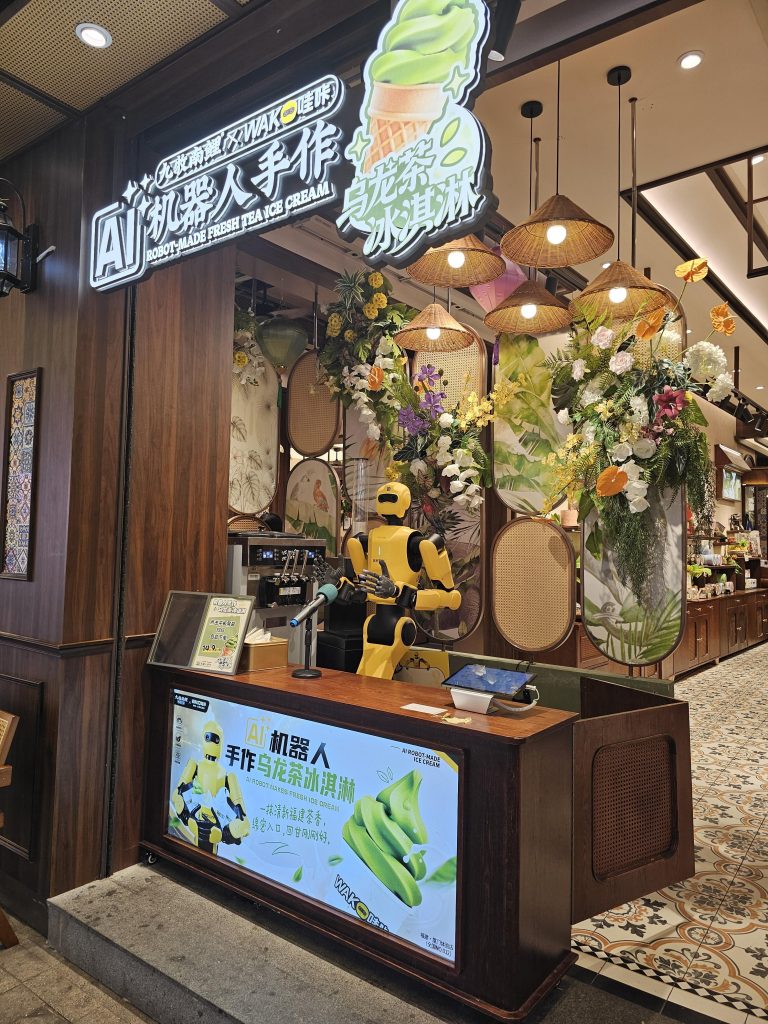
On my first day in mainland China, I came across a machine in Xiamen making fresh tea ice cream without any staff involved. Later, beside Erhai Lake in Dali, I spotted another one.
Neither seemed particularly unusual in a country where people have become accustomed to using technology for almost everything.
Take WeChat and Alipay. These apps go far beyond payments, connecting shopping, transport, food delivery and numerous other services. Chinese consumers often embrace new technologies when they make life more convenient.
But there is another reason why robotics matters in China. With its population shrinking and ageing, China will increasingly need automation to maintain productivity with fewer working-age people.
I wonder how many more everyday tasks will be automated in China over the next decade, especially as its population continues to age.
4) Climate Action, Energy & Food
China’s High-Speed Rail: Nearly 3,000 km in 15 Hours
During my recent travels in China, I covered nearly 3,000 kilometres by high-speed rail in just 15 hours, from Nanchang to Kunming and onwards to Guangzhou. The trains were remarkably stable, service was excellent, and everything ran on time.
Boarding requires some planning. I allowed around 30 minutes for security checks, including X-ray luggage screening and passport checks for foreign travellers.
China aims to expand its high-speed rail network to 60,000 kilometres by 2030. The Beijing–Shanghai railway has carried 2.3 billion passengers since opening in 2011. With such convenient service, I understand its popularity.
As an engineer, I am impressed by how engineering expertise at different levels of government, planning and construction has helped China build this network so quickly.
Still, I suspect some less busy stretches struggle financially.
With China’s population already shrinking, I wonder whether some of today’s impressive railway infrastructure could become tomorrow’s overcapacity.
Small Chinese EVs, Big Challenges for Volkswagen
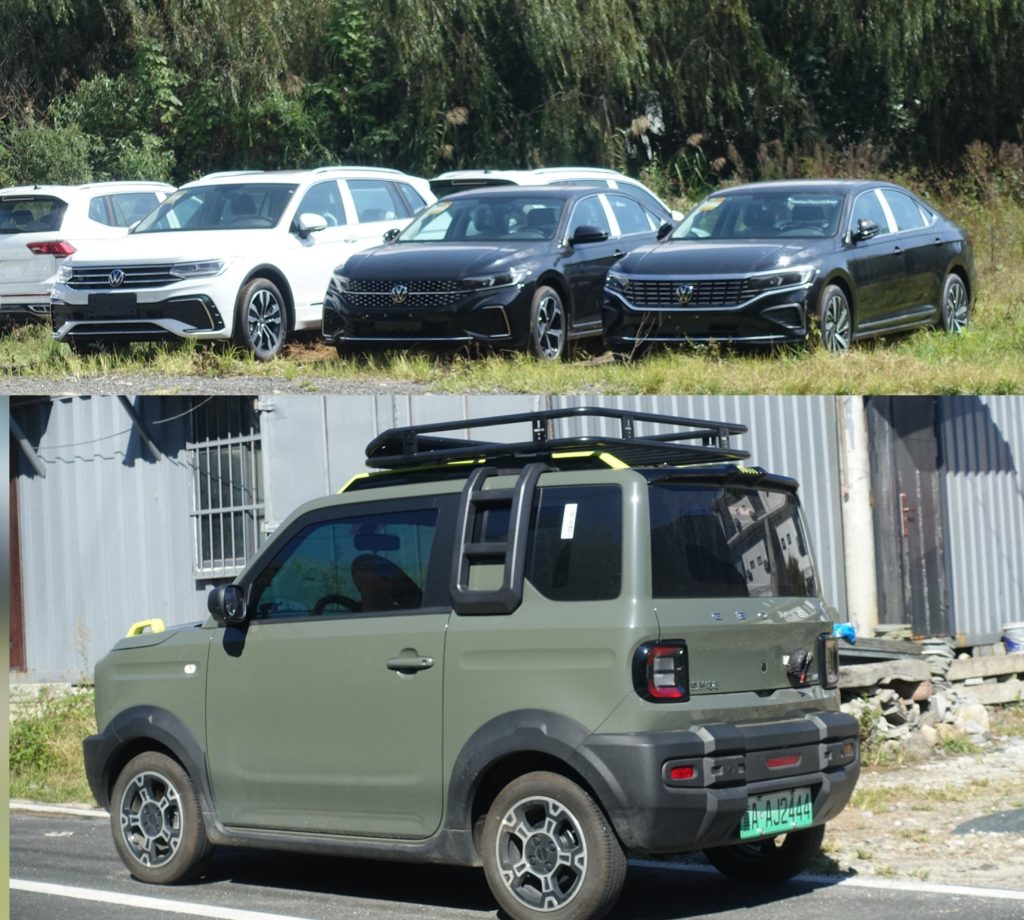
In Kunming took a shot of a tiny Geome electric car, weighing ~800 kg. I also came across several unsold Volkswagen cars parked in a grassy lot. The contrast caught my attention.
China’s carmakers are showing that electric mobility does not have to mean large, heavy and expensive vehicles. In August 2026, China’s two best-selling cars were the Geely Galaxy Xingyuan (星愿, EX2), and the Leapmotor A10. Both are compact electric vehicles starting at around €8,000 in China. Remarkably, nine of the ten best-selling cars were fully electric.
Meanwhile, Volkswagen faces declining sales and fierce competition from Chinese manufacturers. This shift also matters for Europe’s automotive industry, which must compete with increasingly affordable Chinese EVs.
Volkswagen helped put millions of Chinese drivers on the road. Now Chinese manufacturers are showing Volkswagen what the next generation of affordable cars could look like.
💡 Key takeaway
Behind China’s and Taiwan’s impressive progress are people making choices, facing challenges and questioning what progress really means.
Thanks for reading again this month. If you found this useful, feel free to share or subscribe to receive the full analysis in your inbox every month.
I’d love to hear your thoughts. If you have any questions, feedback or suggestions for future editions, simply send me an email at info@peters-perspective.com.
Stay curious,
Author of the book West meets East